
Introduction: Two Paths to Healing
In recent years, Israel has established itself as a global hub for the resurgence of psychedelic medicine. A field that was once relegated to fringe research is returning to the forefront of scientific and clinical practice, offering new hope for those struggling with treatment-resistant conditions such as depression, post-traumatic stress disorder (PTSD), anxiety, and addiction.
For those seeking help in this field, it is essential to understand that there are two separate paths in Israel with fundamentally different characteristics:
Path 1: Clinical Treatment (Psychedelic-Assisted Psychotherapy)
This path is designed for those seeking direct relief from mental distress. Treatment focuses on the patient and their unique needs. In Israel, the most legally available treatment is ketamine-assisted psychotherapy (KAP), and sometimes medical cannabis-assisted psychotherapy (CAPT) for licensed holders.
Following the events of October 7th and the “Swords of Iron” war, several fully subsidized treatment programs have opened in public hospitals, focusing on treating trauma survivors.
Path 2: Clinical Research Participation
This path is designed for those interested in contributing to scientific advancement, and may gain access to experimental substances not yet approved for clinical use, such as MDMA and psilocybin.
Important to emphasize: The purpose of research is data collection and testing general efficacy, not providing personalized care. There is a possibility of receiving placebo (dummy medication), and participation involves strict criteria and discontinuation of other treatments.
Part 1: Available Clinical Treatment in Israel
Ketamine-Assisted Psychotherapy (KAP)
Ketamine is the only psychedelic substance widely available for clinical psychiatric use in Israel. Its use for psychiatric treatment is considered “off-label,” and therefore requires a psychiatrist’s recommendation and submission of “Form 29g” to the Ministry of Health.
Treatment is typically provided for:
Treatment-resistant depression (TRD)
Post-traumatic stress disorder (PTSD)
OCD (obsessive-compulsive disorder)
Chronic anxiety
Public Subsidized Centers (Free of Charge)
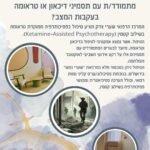
“Shaarei Nefesh” Clinic – Jerusalem
Location: 11 Rivka Street, Talpiot
Indication: Depression or PTSD related to October 7th and the war
Contact: nefesh@szmc.org.il, 02-6666516
Protocol: 12-15 sessions, including 6-10 experiential sessions with ketamine, including preparation and integration. Free of charge.
Required documents: Personal information questionnaire, medical summary, psychiatrist referral, health fund commitment (Form 17), blood tests (thyroid function, CBC, chemistry), ECG.
Psychedelic Research and Treatment Unit – Be’er Sheva
Indication: PTSD related to the “Swords of Iron” war
Contact: yosef.rosenberg@pbsh.health.gov.il, 08-6401502
מרפאות וקליניקות פרטיות - מודל KAP (פסיכותרפיה)
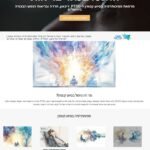
“Keter – Mental Health” (Keter Health) – Jerusalem
Location: 10 Zevulun Hammer Street
Indication: Depression, PTSD, anxiety, palliative care
- Website: https://keterhealth.com
Non-psychedelic therapies with ketamine (often confused with KAP)
Ketamine Infusion (IV) Therapy
Another available option in Israel is IV Ketamine Infusion, a model often practiced by clinics like KetaMind. This approach is frequently confused with KAP but operates on a different philosophy. IV therapy treats ketamine primarily as a fast-acting biological antidepressant. Patients receive a slow, controlled intravenous drip of ketamine over approximately 40-60 minutes in a clinical setting. While the environment may be comfortable, the process does not typically include a therapist to guide the psychological experience. The primary goal is a neurochemical “reset” of the brain to rapidly alleviate symptoms of depression. While some clinics may encourage separate talk therapy, the infusion session itself is a pharmacological intervention, not a psychotherapeutic one.
Spravato® (Esketamine) Nasal Spray
Spravato® is the brand name for esketamine, a molecule derived from ketamine, which is administered as a nasal spray. This treatment is approved for treatment-resistant depression and is often available through the public health system (Kupat Holim) with a psychiatric referral. It’s important to understand that, like IV infusions, Spravato is a pharmacological treatment, not psychedelic therapy. Patients self-administer the spray in a clinic and are monitored for about two hours for side effects like dissociation and sedation. However, the protocol does not include a therapeutic component during or after the session. It is designed to leverage the antidepressant effects of the drug, distinct from the deep psychological processing that is central to KAP.
פסיכותרפיה נתמכת קנאביס רפואי (CAPT)
This treatment is intended only for those holding a valid medical cannabis license. Treatment does not include providing the substance, but rather professional guidance for controlled use of the substance the patient already legally possesses.
Therapist: Shaun Lacob
Location: Kibbutz Tzora / Jerusalem
Website: https://shaunlacob.com/capt
Contact: shaunlacob@gmail.com
Part 2: Clinical Research Participation
Critical Difference: Research Is Not Treatment
Before considering research participation, it’s important to understand the fundamental differences:
In clinical treatment:
Primary goal is your personal wellbeing
Treatment plans adapted in real time
Therapist focused on your specific condition
In clinical research:
Primary goal is scientific data collection
Fixed protocols regardless of your response
Possibility of receiving placebo (dummy medication)
Strict criteria – many are disqualified
Required discontinuation of psychiatric medications and psychotherapy
Intensive monitoring and frequent testing
Research participation serves science first, and your personal benefit second.
MDMA Research
MDMA is being intensively researched for PTSD treatment and has been granted “breakthrough therapy” designation by the FDA. Israel is a world leader in this field.
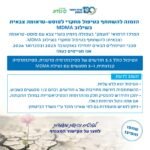
Emek Medical Center – Afula
Indication: Military PTSD (including “Swords of Iron”)
Contact: rotem_sw@clalit.org.il, 052-5935391
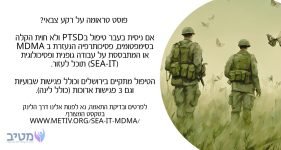
“Metiv” (Herzog Hospital) – Jerusalem
Indication: Military PTSD (men only)
Contact: Form submission at metiv.org
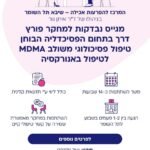
Sheba Hospital (Tel HaShomer) – Central
Indication: Anorexia, PTSD
Protocol: Approximately 4 months, weekly visits. Combines individual therapy (2 sessions with MDMA) and group therapy (1 session with MDMA). Free of charge.
Psilocybin Research

Be’er Sheva Mental Health Center
Treatment-resistant depression (microdosing):
Contact: noa.rothmann@pbsh.health.gov.il
Protocol: Intensive day treatment for 4 months (5 days/week), daily microdose + psychotherapy
OCD (full dose):
Contact: noa.rothmann@pbsh.health.gov.il
Protocol: 15 therapeutic sessions, including 3 experiential sessions
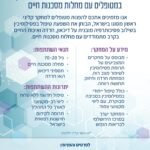
Jerusalem Mental Health Center
Indication: Depression and anxiety (terminal illness)
Contact: moshe.i@moh.gov.il, 02-6551424
Detailed Additional Information
For comprehensive and updated information on all active research studies in Israel, including eligibility criteria, registration processes, and complete contact details, visit:
Psycircle Guide to Psychedelic Research in Israel:
https://psycircle.co.il/psychedelic-therapy/
Ministry of Health Clinical Trials Registry:
https://clinicaltrial.health.gov.il/clinicaltrials/
How ACPT Can Help You
ACPT offers:
Consultation and Navigation: Understanding the differences between treatment and research
Assessment: Are you suitable for research or clinical treatment?
Matching: Connection to therapists and centers suited to your condition
Ongoing Support: Guidance throughout the process
The ACPT team includes psychiatrists, clinical psychologists, social workers, and other professionals who can help you navigate this complex system and find the most suitable path for you.
Contact Us
General Questions:
Feel free to send us questions via email through the ACPT website:
https://acptisrael.com
In-Depth Consultation:
If you would like to discuss your case in detail, you can schedule a personal consultation via Zoom (one hour) for 150 NIS.
To contact us and schedule a meeting, reach out through the website.
Important Disclaimer:
The information presented on this page is for informational purposes only and does not constitute personal or medical advice regarding any treatment center or research study. All treatment decisions should be made in consultation with a licensed medical professional. ACPT provides information and navigation assistance, but does not recommend specific treatments or specific therapeutic alternatives.